
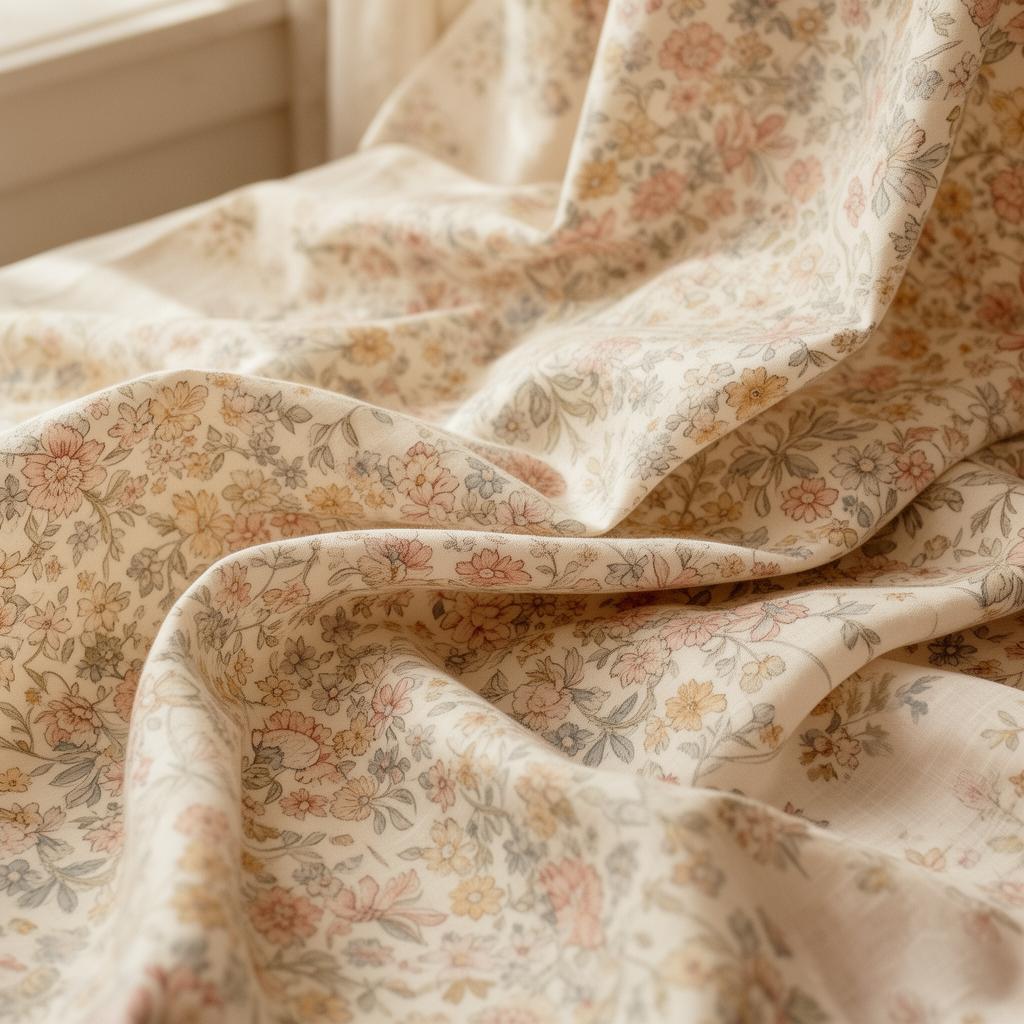
Liberty: The History and Longevity of an Iconic Print
Founded in London in 1875 by Arthur Lasenby Liberty, the House of Liberty originated from the trade of silks and art objects imported from Asia. The aesthetic promoted by the Regent Street store quickly found success, aligning with the Arts and Crafts movement and collaborating with designers of the era to create its own emblematic patterns.
The Tana Lawn Signature
Liberty's success is built on a major material innovation from the 1920s: "Tana Lawn." This cotton fabric, named after Lake Tana in Ethiopia where the long-staple cotton was initially sourced, boasts exceptional qualities. Its fineness and dense weave give it a silky feel, great lightness, and remarkable durability. This textile base became the preferred canvas for the house's characteristic floral and graphic prints. It is this intrinsic quality that allowed Liberty fabrics to establish themselves in the luxury segment.
The Design Studio: A Pillar of Renewal
The longevity of Liberty Fabrics lies in its capacity for creative innovation. The house has its own design studio, which creates hundreds of new patterns each year while reinterpreting an archive of over 45,000 designs. This constant production fuels seasonal collections and collaborations, allowing the brand to reinvent itself without ever losing its identity. The designs are often hand-drawn using watercolor, gouache, or ink before being translated for textile printing. This artisanal process ensures depth and uniqueness in the patterns.
A Model of Expansion Through Collaboration
From the mid-20th century, Liberty expanded its influence beyond fabric by the meter by partnering with names in haute couture and then ready-to-wear. These collaborations helped solidify its iconic status and reach new markets. Designers like Paul Smith and Cacharel helped popularize its prints. This strategy proved particularly relevant in the children's fashion market, where the delicacy of the patterns and the quality of Tana Lawn cotton resonated with high-end brands. Rather than simple diversification, these partnerships form a strategic axis that maintains the brand's desirability.
Adapting to Contemporary Challenges
Today, Liberty Fabrics is a global company with international distribution and showrooms in fashion capitals. Its growth is driven by a high-performance digital platform that offers professionals direct access to its vast collections. Aware of the new demands of the sector, the company also integrates social and environmental responsibility imperatives into its operations. It is a signatory of the United Nations Global Compact, a commitment that affects its entire value chain, from raw material sourcing to production.
The richness of its history and the quality of its raw material give Liberty fabric a special status. Beyond its primary use, it is often kept, passed down, and reused, finding a second life in new projects. This material and stylistic longevity illustrates how a high-quality textile can inherently fit into a circular economy, where value endures through time and use.