
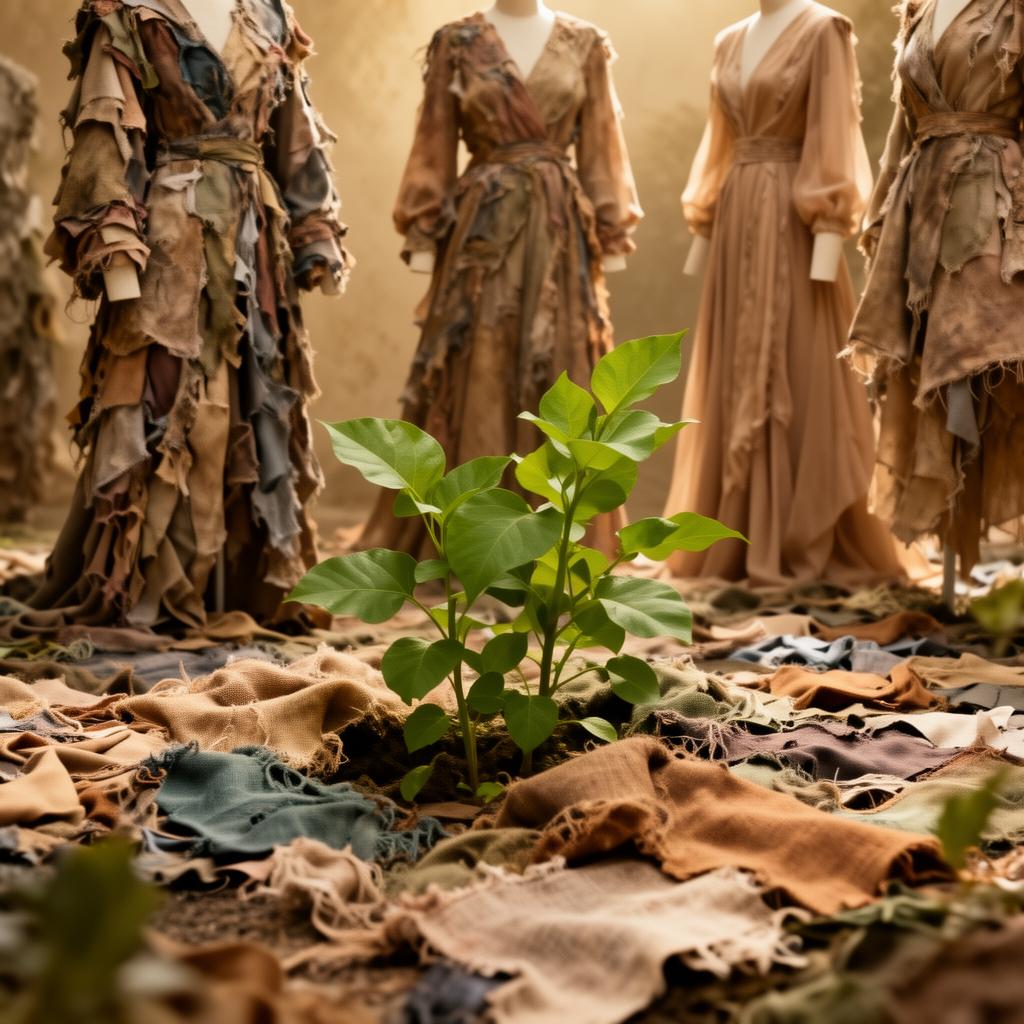
The Ecological Impact of Upcycling
In a world where the climate emergency calls for a revolution in our consumption and production habits, upcycling is emerging as a beacon of hope, particularly in the fashion industry, which is known for its heavy carbon footprint. Azala, at the forefront of this revolution, is rethinking clothes manufacturing by adopting sustainable practices that not only reduce environmental impact but also breathe new life into materials otherwise destined for disposal. This article delves into the heart of upcycling, revealing its potential as the most viable ecological solution for the fashion industry, through the lens of Azala. Our journey explores the tangible impact of these practices on the carbon footprint, with a special focus on combating water eutrophication, illustrating how conscious actions can lead to a sustainable fashion future.
Part 1: Upcycling, the Most Ecological Solution for Garment Manufacturing
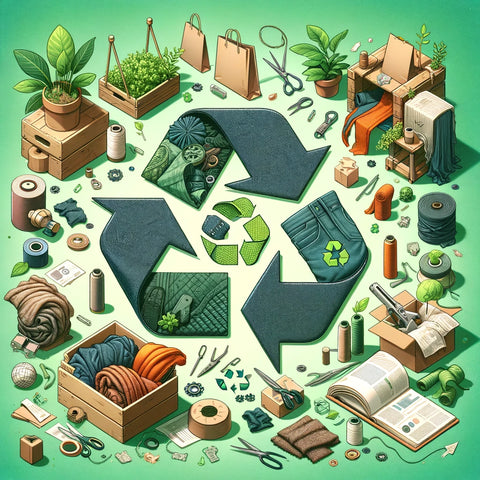
Upcycling represents a revolutionary approach to garment production, offering a concrete response to current environmental challenges. Unlike recycling, which often degrades material quality to create a lower-value product, upcycling transforms waste or unused materials into products of superior quality, without compromising their original value.
In the fashion industry, upcycling stands out as an essential ecological alternative, making it possible to significantly reduce the carbon footprint. Textiles destined for landfills are reinvented into unique fashion creations, thereby avoiding the production of new fabrics—an energy-intensive and highly polluting activity. This method helps to reduce CO2 emissions and conserve natural resources by lowering the demand for water, energy, and other raw materials needed to manufacture new textiles.
The impact of upcycling extends beyond mere waste reduction. By promoting a circular economy, it also encourages creativity and innovation within the industry. Azala's designers, for example, are rethinking fashion by creating trendy pieces from reclaimed materials, proving that style and sustainability can coexist.
Upcycling thus offers a double victory: it helps fight against climate change by minimizing the environmental impact of fashion, while also paving the way for more conscious and innovative production practices.
Part 2: Case Study on Azala, Our Carbon Footprint, Our Average Performance
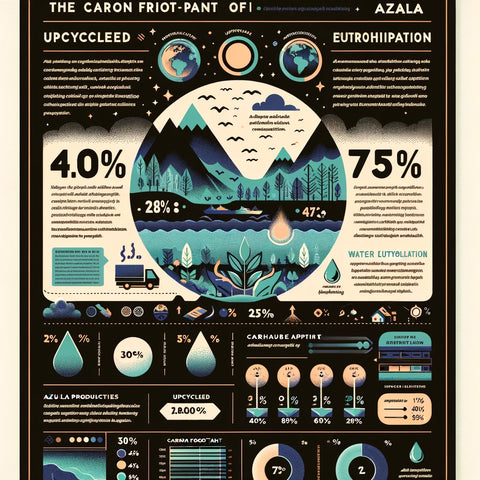
Azala is committed to an eco-responsible approach, particularly through textile upcycling, with the goal of reducing its carbon footprint and environmental impact. This section provides an overview of Azala's carbon footprint and its sustainability performance.
Evaluation Methodology: Our approach is based on the ADEME framework, a recognized method that assesses environmental impact based on two main criteria: climate change and freshwater eutrophication. We compare our upcycled products to non-upcycled equivalents to illustrate our impact reduction.
Azala's Results:
- Women's Quilted Jacket: Our analysis shows a significant 66% reduction in greenhouse gas (GHG) emissions and a 98% reduction in discharges contributing to water eutrophication, compared to a non-upcycled version.
- Children's Vest (dyed and undyed): We observe a similar reduction in GHG emissions and eutrophication-causing discharges, demonstrating the effectiveness of our upcycling and water treatment practices.
These results attest to the positive impact of upcycling on reducing the carbon footprint. By avoiding the use of new raw materials and optimizing our production processes, Azala actively contributes to the fight against climate change and the protection of water resources.
Future Commitments: Azala continues to explore avenues to further improve its carbon footprint, including increasing the use of renewable energy and optimizing the transportation of its products. Our goal is to strengthen our commitment to sustainable fashion while maintaining the quality and aesthetic of our creations.
Part 3: Focus on Water Eutrophication and the Manufacturing Carbon Footprint
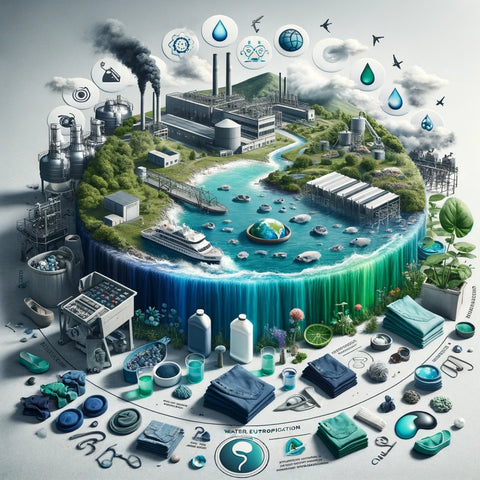
Water eutrophication, a phenomenon where waterways become excessively rich in nutrients (like nitrogen and phosphorus), leading to an overgrowth of algae that reduces the oxygen available for other aquatic life, is a major environmental problem exacerbated by many industries, including fashion. This process can lead to the death of aquatic wildlife, affect water quality, and disrupt ecosystems.
As part of its sustainability mission, Azala is tackling this problem by adopting manufacturing practices that minimize the impact on water eutrophication. Through upcycling, Azala significantly reduces the amount of textile waste that might otherwise end up in landfills or waterways, thereby helping to reduce nutrient pollution.
Azala's Strategies:
- Water Management: Azala uses dyeing and finishing processes that require less water than traditional methods, thereby reducing the volume of wastewater produced.
- Wastewater Treatment: All wastewater from production is treated to remove contaminants before being discharged, minimizing the input of harmful nutrients into waterways.
- Sustainable Materials: By choosing upcycled materials, Azala avoids the use of fertilizers and pesticides associated with the cultivation of new fibers, such as cotton, which are major contributors to waterway eutrophication.
These efforts not only contribute to the fight against eutrophication but also to a significant reduction in the manufacturing's carbon footprint. By decreasing reliance on virgin raw materials and optimizing production processes, Azala is working towards a fashion that is more respectful of the environment.
In conclusion, upcycling proves to be a powerful strategy for the fashion industry to reduce its environmental footprint. Azala embodies this commitment by transforming otherwise overlooked materials into durable and elegant clothing, demonstrating that style does not have to be sacrificed for the sake of sustainability. Azala's initiatives, from significantly reducing greenhouse gas emissions to combating water eutrophication, illustrate the positive impact that upcycling can have on our planet.
However, Azala's impact does not stop there. By adopting eco-responsible manufacturing practices and raising awareness about the importance of sustainability in fashion, Azala is paving the way for broader change within the industry. This article highlights not only Azala's successes but also the potential of upcycling as an ecological solution for the future of fashion.
We invite everyone to take part in this movement towards more sustainable fashion. By supporting brands like Azala, which prioritize upcycling and environmental responsibility, consumers can contribute to a greener future for our planet. Together, we can transform the fashion industry into a force for good, ensuring that our love for fashion does not hinder our love for our world.