
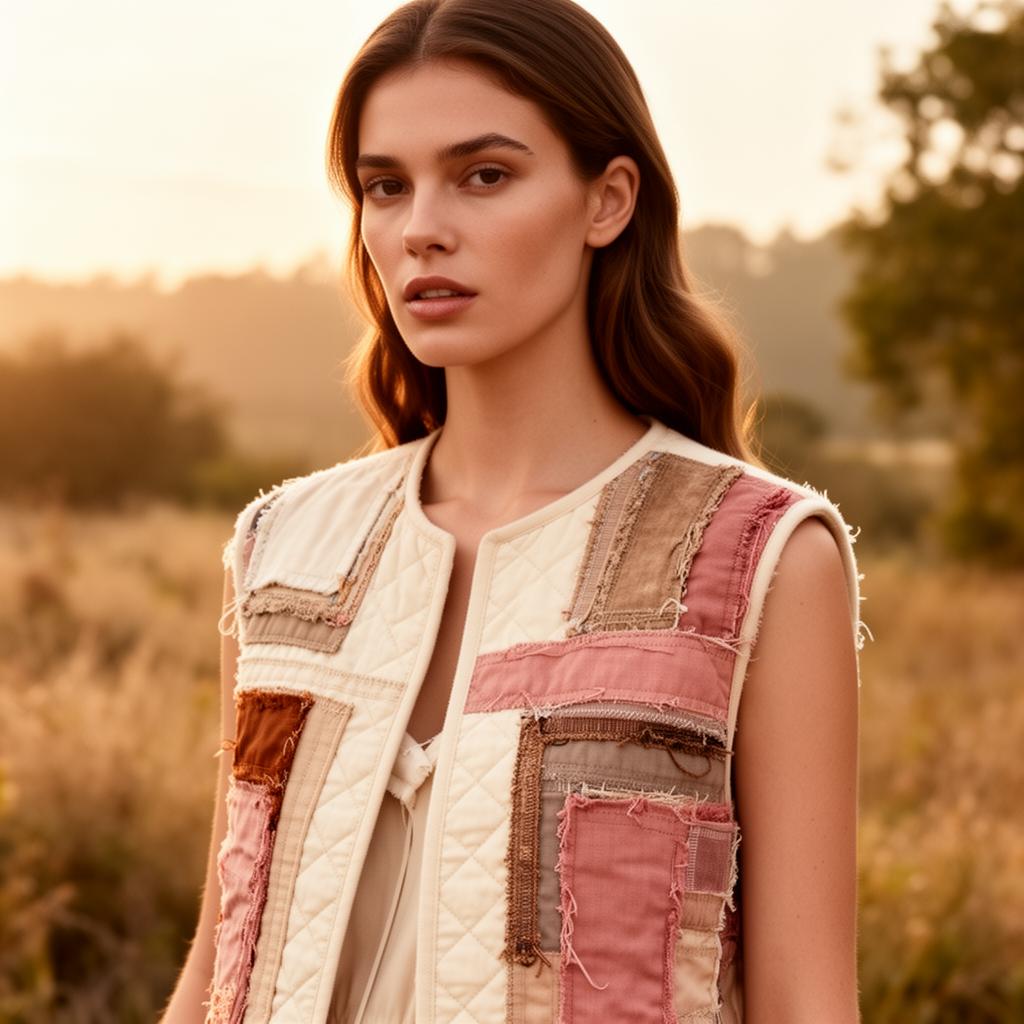
The Vest: An Archetype of Functional Apparel
A Garment at the Crossroads of Use
The vest is less a passing trend than a wardrobe staple, whose cyclical returns to the spotlight underscore its relevance. Far from being a simple transitional piece, it has established itself as a structural garment, capable of adapting to a multitude of contexts, from formalwear to technical outdoor gear.
Its strength lies in its functional versatility. As a suit vest, it adds a formal touch; as a puffer vest, it becomes an insulating layer for sports; as a shepherd's vest, it evokes a rustic and authentic feel. This adaptability makes it a relevant object of study for fashion brands analyzing consumer behavior and apparel archetypes.
Versatility and Modularity: An Asset for Brands
The success of the vest is part of a fundamental industry trend: the search for modularity. Consumers and companies are turning to more versatile garments that can transition across seasons and adapt to different life moments.
The "Layering" Principle
The vest is the centerpiece of "layering," or the art of superposition. It enhances the utility of other items in a wardrobe: worn over a shirt, a light sweater, or even under a coat, it adds a layer of warmth and texture without the bulk of sleeves. For a product department, it's a way to offer a cohesive collection where pieces interact, increasing their lifespan and perceived relevance.
Simplifying the Wardrobe
By blurring the lines between clothing categories (indoor/outdoor, formal/casual), the vest contributes to a simplified wardrobe. It meets a need for efficiency and streamlining, both for the end user and for the brand, which can focus its efforts on a high-turnover item with multiple variations.
The Vest as a Medium for Material Innovation
The vest's structural simplicity makes it an excellent platform for textile experimentation. Its surface, often composed of two front panels and one back panel, is ideal for showcasing specific materials.
Quilted versions, for example, are a playground for innovation in padding. The industry is now exploring alternatives to animal down, such as batting made from recycled polyester (rPET) or other bio-based fibers, which offer comparable thermal performance with a lower environmental impact.
More formal versions, on the other hand, allow for the use of tweeds, velvets, or wool cloths, whose textural qualities are highlighted by the garment's clean cut. The vest thus becomes a canvas for expressing craftsmanship and a brand's material focus.
Industrial Optimization and Eco-Design Potential
Beyond its stylistic appeal, the sleeveless vest offers considerable advantages from a production and eco-design standpoint—key arguments for CSR and industrial departments.
Simplified Construction
The absence of sleeves radically simplifies the manufacturing process. Sleeve setting is one of the most technical and time-consuming steps in garment construction. Eliminating it reduces production time, the number of pieces to assemble, and the overall complexity of pattern making. This results in optimized costs and production flows.
An Ideal Medium for Upcycling
It is arguably in circularity that the vest reveals its greatest potential. Its structure, based on medium-sized panels, is perfectly suited for upcycling. It allows for the reuse of production scraps, end-of-rolls, or fabric panels from deconstructed garments that would be too small to produce a sleeved piece like a jacket or coat.
This intrinsic feature makes the vest a flagship product for material revalorization strategies. It offers a concrete solution for transforming deadstock or textile waste into desirable, high-value-added products.
The vest's journey from a simple wardrobe supplement to a strategic piece illustrates a shift towards more considered fashion. Its simple construction opens up significant opportunities for repurposing existing materials, transforming production surpluses or textile resources into new items. It thus embodies the potential alignment of industrial efficiency, stylistic relevance, and creative circularity.