
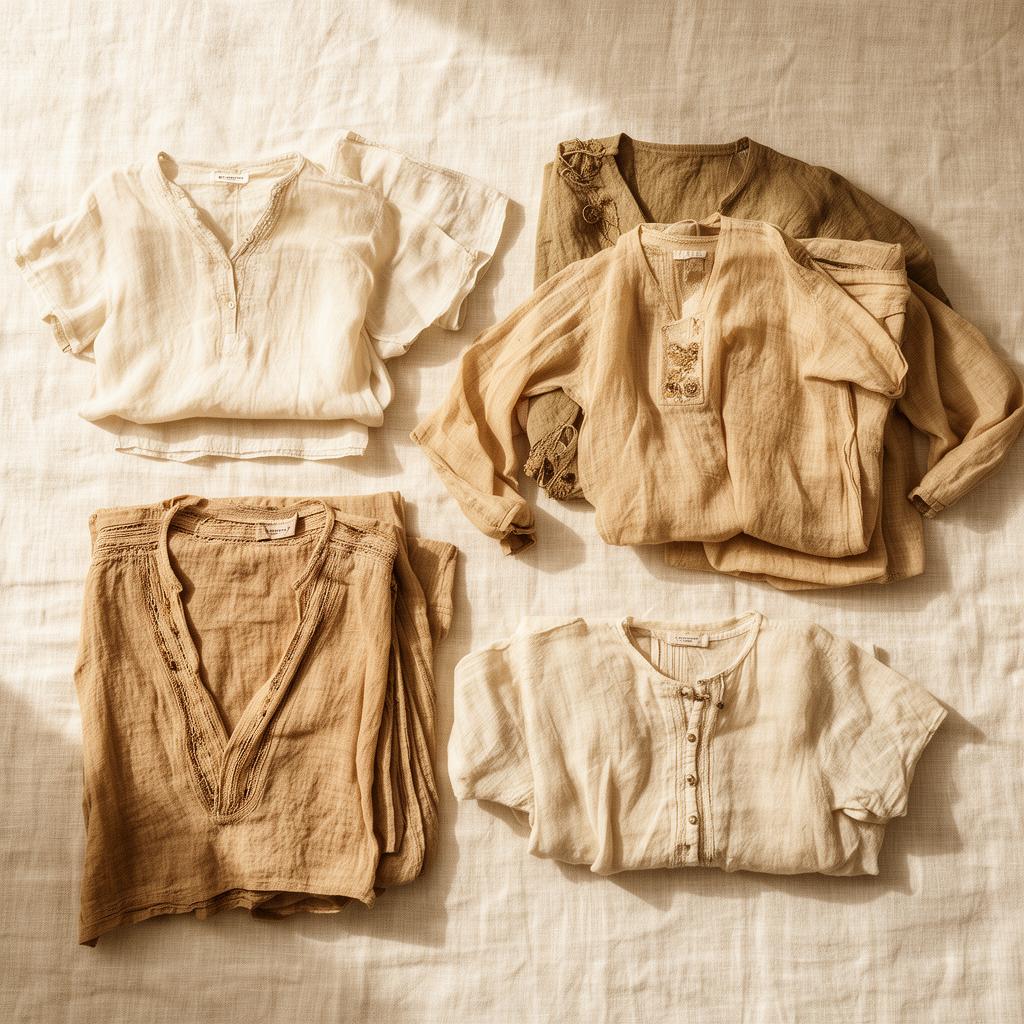
Anatomy of a Committed Fashion Brand
The "eco-responsible" label is now claimed by a growing number of fashion brands. Faced with this widespread use, it has become imperative for industry professionals to be able to distinguish genuine commitments from marketing claims. Defining a brand as truly responsible requires a systemic analysis covering its entire life cycle, from fiber to business model.
The Foundation: The Choice of Raw Materials
The first pillar of a responsible approach lies in the nature of the materials used. The discussion is no longer limited to a simple opposition between natural and synthetic, but now incorporates concepts of circularity and manufacturing processes.
Low-Impact Natural Fibers
Plant-based fibers like linen and hemp are often cited for their reduced need for water and pesticides. Organic cotton, certified by labels such as GOTS (Global Organic Textile Standard), guarantees cultivation without synthetic chemical inputs and includes social criteria. These certifications provide traceability and audited assurance, which are essential for validating a brand's claims.
Man-Made Fibers from Green Processes
Materials like Tencel™ Lyocell, produced from wood pulp from sustainably managed forests, represent an interesting alternative. Their main advantage lies in their nearly closed-loop manufacturing process, where over 99% of water and non-toxic solvents are recycled. This stands in sharp contrast to conventional viscose production.
The Potential of Recycled Materials
The use of recycled fibers, such as polyester from plastic bottles (rPET) or recycled cotton and wool, is a major driver of circularity. This approach reduces pressure on virgin resources and lowers the energy footprint of production. However, it presents technical challenges, particularly the loss of fiber quality and the complexity of sorting end-of-life textiles.
Production: Value Chain and Social Impact
A sustainable raw material loses all meaning if its transformation ignores human and environmental issues. Mastering the production chain is therefore the second fundamental pillar.
Transparency and Traceability
Mapping the supply chain, from the field to the garment factory, is a complex but essential task. The most advanced brands openly communicate the identity and location of their suppliers. This transparency is a prerequisite for verifying social and environmental commitments.
Working Conditions and Fairness
Respect for human rights at work is non-negotiable. Beyond declarations of intent, certifications like SA8000, Fair Wear Foundation, or Fair Trade provide guarantees on wages, working conditions, and freedom of association. Choosing local or European production can also facilitate monitoring and ensure compliance with strict standards.
Managing the Industrial Footprint
The dyeing and finishing stages are among the most polluting in the textile industry. The use of dyes certified by labels like Oeko-Tex Standard 100 or Bluesign guarantees the absence of harmful substances. Committed brands also invest in water and energy-efficient processes.
Business Models and End-of-Life Management
The business model itself must evolve to align with a logic of sustainability. A responsible brand does not just sell a product; it considers its entire life cycle.
Designing for Durability and Circularity
Durability begins at the design phase. This translates into the choice of timeless cuts, quality construction, and ease of repair. "Designing for circularity" goes a step further by anticipating the product's disassembly, for example, through the use of mono-materials that simplify future recycling.
New Circular Models
Pioneering brands are exploring models that decouple growth from production volume. Rental, repair services, or organizing take-back for second-hand use are strategies that extend product life and create a relationship based on service rather than ownership.
Adopting a responsible approach means shifting from a linear production logic (extract, make, dispose) to a circular and systemic vision. The challenge is no longer just to produce "better," but to produce "less" and to value what already exists.
This transition to more virtuous models redefines the concept of value in the fashion industry. It no longer lies solely in novelty, but in durability, transparency, and the ability to turn waste into resources. The creative and technical intelligence of upcycling, or giving new value to existing materials, thus represents one of the most accomplished embodiments of this new textile economy, where yesterday's waste becomes tomorrow's resource.
Further reading: What is fashion? Definition, industry and the life cycle of a garment.