
Decarbonizing the Textile Industry: From Awareness to Concrete Solutions
The Carbon Footprint of the Textile Industry
The textile industry is a pillar of the global economy, but its growth has come at a considerable environmental cost. Its carbon footprint, in particular, is a major challenge that must be measured in order to be better managed.
The figures illustrate the scale of the challenge. According to a report by the Ellen MacArthur Foundation, the textile industry produced 1.2 billion tons of greenhouse gases in 2015, an amount greater than the combined emissions of all international flights and maritime shipping.
These emissions come from the entire product life cycle:
- The production of raw materials: Synthetic fibers like polyester, nylon, or acrylic are derived from petrochemicals, a highly energy-intensive process that emits carbon dioxide.
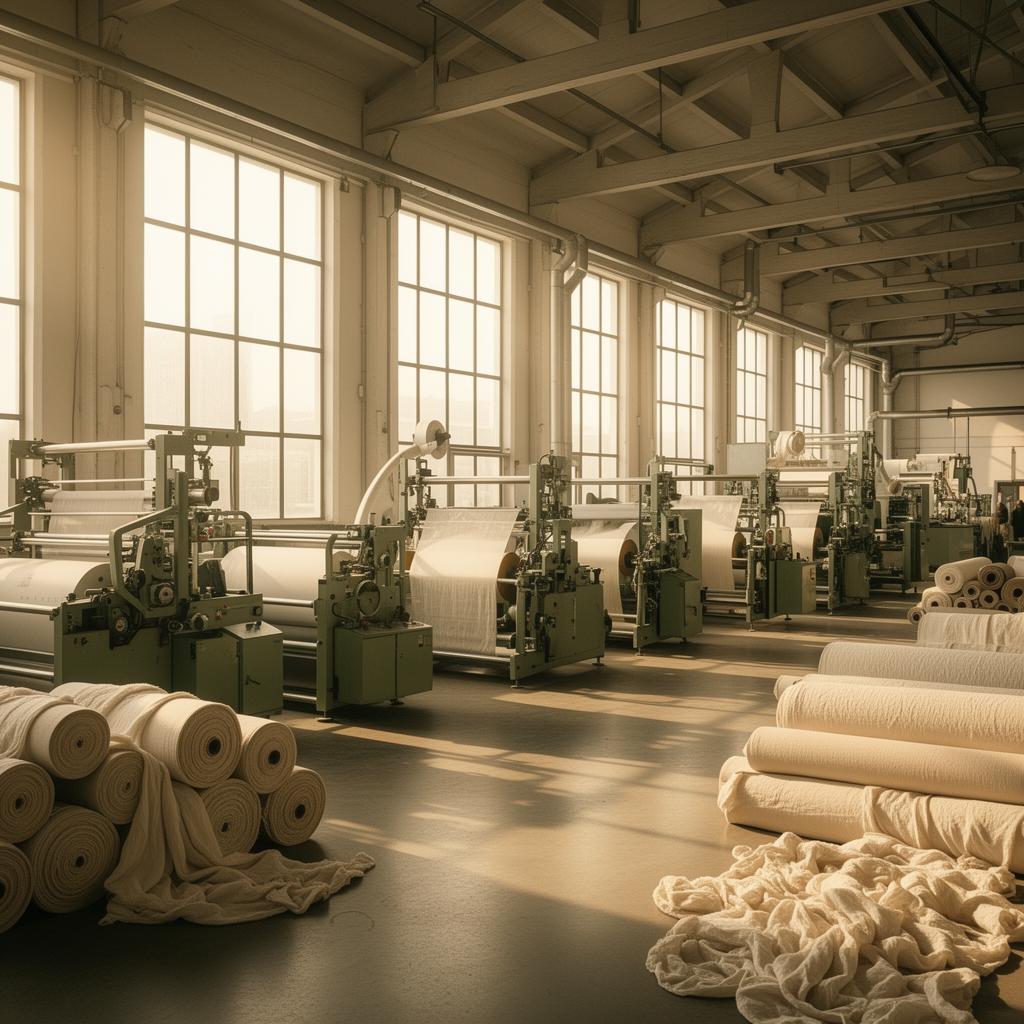
- Manufacturing processes: Spinning, weaving, dyeing, and finishing treatments for textiles require significant amounts of energy, often from fossil fuels, as well as large quantities of water.
- Transportation: In a globalized industry, transporting raw materials and then finished products over long distances contributes significantly to the overall carbon footprint.
- End-of-life: The disposal of textile waste, mostly through landfilling, leads to the decomposition of materials and the release of methane, a greenhouse gas with a much higher warming potential than CO2.
Solutions to Reduce the Carbon Footprint
Faced with this reality, the industry has a responsibility to undergo a profound transition. Several concrete paths exist to reduce its environmental impact.
A first solution is to prioritize sustainable and renewable materials. Fibers like organic cotton, hemp, or linen require less energy and chemical treatments during their production. Their biodegradable nature also reduces the pressure on landfill sites.
Optimizing industrial processes is another essential lever. Implementing energy-efficient manufacturing technologies and using renewable energy sources, such as solar and wind, can drastically decrease production-related emissions.
Finally, improving transportation methods, through the use of electric vehicles or alternative fuels, can also make a difference. These actions are part of a broader vision: that of a circular economy model, in which waste is no longer considered an end, but a resource.
Upcycling at the Heart of Change
In this transition to a circular model, upcycling stands out as a particularly relevant approach. The principle is to transform end-of-life materials or products into new items of higher quality and value.
Upcycling helps reduce the industry's carbon footprint in several ways:
- It reduces the volume of textile waste. According to the U.S. Environmental Protection Agency (EPA), the United States generated 17.6 million tons of textile waste in 2018, only 2.6 million of which were recycled. By upcycling these materials, we give them a new life and avoid the methane emissions associated with their decomposition in landfills.
- It decreases the need to produce new materials. By using existing resources, upcycling reduces the demand for virgin fibers, whether synthetic or natural, thereby saving the energy and emissions associated with their production.
- It embodies the circular economy. Upcycling is the direct application of the circular model, where resources are kept in use for as long as possible before being regenerated at their end-of-life.
Upcycling in Practice
There are many examples of upcycling in the textile industry. Used jeans can be cut and assembled to create bags, cushions, or rugs. Discarded t-shirts can be transformed into scarves, headbands, or other accessories.
Beyond its environmental benefits, upcycling fosters innovation and creativity in the design process. It allows for the creation of unique, high-quality products that tell a story.
The textile industry has a significant carbon footprint, but solutions exist to mitigate its impact. By reducing waste volume and the demand for new materials, upcycling contributes to building a more sustainable and environmentally friendly industry.
Toward a Responsible Textile Industry
The impact of the textile industry on global warming, estimated at nearly 10% of global carbon emissions, demands action. Adopting sustainable practices at every stage has become imperative.
This transition to a more circular economy is a collective effort. It involves the responsibility of manufacturers, designers, public authorities, and consumers. Together, we can build a sustainable future for fashion.
The Azala Team
'''