
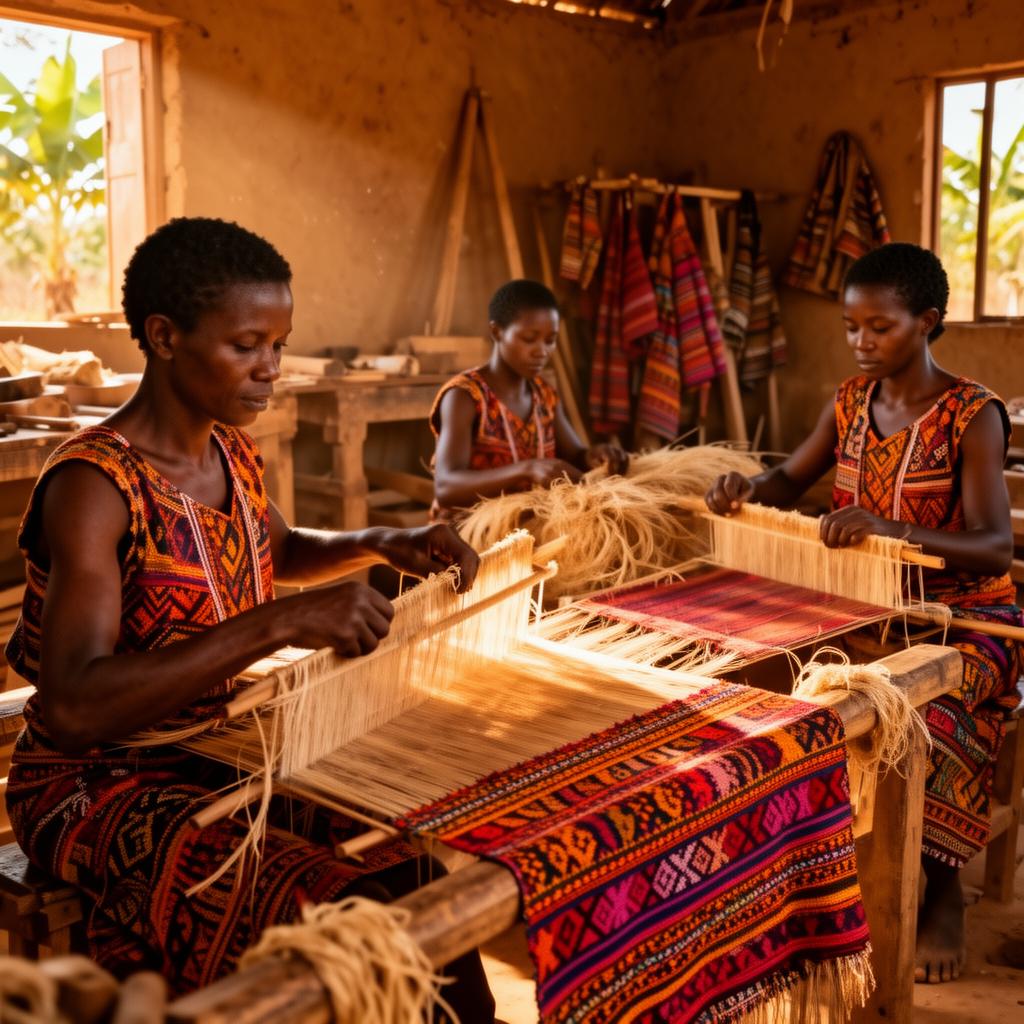
The History of Textiles in Madagascar: A CSR Strategy?
The textile industry holds a significant place in the Malagasy economy, particularly concerning the country's trade balance. Although it has not developed in Madagascar as it has in Asian countries and some Maghreb nations, the country's garment companies manage to maintain a position in the global manufacturing economy.
It goes without saying that the country has very few garment giants, unlike the multi-story factory buildings seen in Bangladesh. For the most part, Malagasy garment factories are human-scale operations where, fortunately, you don't need a helicopter to get from one building to another.
Although hindered by a limited number of medium-sized manufacturers (which sometimes prevents new clients from entering the region), the country has capitalized on its distinctive manufacturing know-how and a growing focus on social and environmental considerations.
It is now clear that a paradigm shift is underway in the industry, and it is possible that the previously hindered development of Malagasy textiles may ultimately herald a bright future for local manufacturing.
A Few Key Figures: David vs. Goliath and Goliath

The revenue of the textile industry in Madagascar is about €120 million, compared to €700 million for Morocco and over €30 billion for Bangladesh.
The textile industry in Bangladesh alone represents twice the GDP of Madagascar. China's textile industry generates nearly €250 billion annually.
A Bit of History
The industrial history of textiles in Madagascar dates back to the early 20th century. Under colonization, numerous spinning and weaving mills were established in the country with the arrival of new European looms.
Until the mid-20th century, the Malagasy industrial fabric experienced a period of growth, but the Second World War disrupted the country's economic cycle. As the Malagasy textile industry was designed to supply France, the drastic decrease in French imports brought the expansion of local manufacturing to a screeching halt.
After the war, the textile industry restarted and began to diversify its exports beyond France, especially after decolonization (1960). But once again, the sector's momentum was quickly broken by new competition from Asian countries (notably China) starting in the early 1980s. Malagasy exports to Europe declined drastically, and Madagascar could not keep pace with other producing countries.
Despite the huge gap between Madagascar and the major textile-producing countries, the industry never completely disappeared. Thanks to the Multi-Fibre Arrangement, new factories continued to emerge in the 1990s and early 2000s.
Currently, Madagascar has only a few dozen exporting textile factories, and the vast majority of exports are still directed to France. The sector receives little government support, and starting an export business has become very difficult. Nevertheless, many major brands continue to manufacture in the region, which, despite a competitive disadvantage, retains strong know-how in garment production.
The Ecological Transition: An Opportunity for the Malagasy Industry?
Sustainable textiles in Madagascar are somewhere between myth and reality. What is clear is that they represent a huge opportunity for the textile industry and the Malagasy economy. What is certain is that the slow growth of the textile industry and the prevalence of small, family-owned businesses have fostered an early development of sustainable practices compared to other manufacturing countries.
Several factors explain this promising trend. The country's strong artisanal identity, such as the work with raffia or wild silk, numerous local skills like embroidery, and the relatively high-end positioning of local manufacturers are all factors that are enabling the textile environment to take a pioneering turn towards CSR.
Of course, the journey is far from over, but the observation stands. Visiting the country's textile factories, one can find private wastewater treatment plants in companies with revenues of just a few million euros. The country's abundant sunshine and difficulties in electricity supply have also encouraged the deployment of solar panels in factories. Furthermore, numerous social initiatives are emerging: community nurseries, medical centers (supported by Malagasy social security), milk banks, etc.
Foreign clients have also promoted CSR development in Malagasy textiles. Since a significant portion of the brands working with Madagascar are French, sustainable development has been widely encouraged. Several local factories are accredited with major international labels (GOTS, ECOCERT, etc).
Given these characteristics, and despite the country's many difficulties, it is possible that Madagascar's place in the global apparel industry will strengthen. When we know that the final transportation of a garment accounts for only 2 to 4% of its environmental impact, the ability to reduce the manufacturing footprint and the negative externalities of garment production must become an anchor for the future development of the Malagasy industry.
Azala: A New Story of 'Made in Mada' Textiles
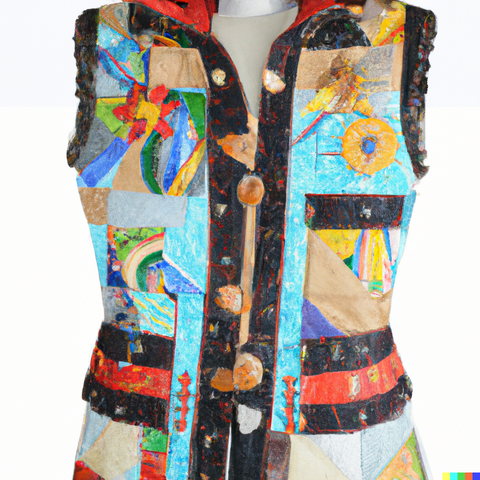
Azala means "oh là là" in Malagasy, and although that has nothing to do with the topic of this article, we thought we'd mention it.
Beyond its own mission, which is to create a virtuous and circular ecosystem in the fashion industry, Azala wanted to provide a proof of concept for Malagasy industrial know-how by manufacturing entirely upcycled products.
This proof of concept has several aims:
- Demonstrate the possibility of manufacturing a product without using new materials
- Propose a manufacturing model on the border between industrial and artisanal
- Promote Malagasy know-how
- Design a different, fairer business model: manufacturing represents about one-third of a product's cost
- Manufacturing must have a direct and indirect impact on the country: by working on a production project in partnership with local associations (in progress) and by subsidizing local ecology (through reforestation projects)
Oh là là... discover our upcycled products made in Madagascar
In conclusion, a new paradigm is emerging in the global textile industry, for the better. The particular characteristics of the Malagasy industrial zone make it a favorable place to approach this change. Madagascar must go even further in the industrialization of sustainable textiles, fully embracing new concepts around upcycling, organic materials, responsible craftsmanship, and the circular economy.
Sofiane Bouhali for Azala