
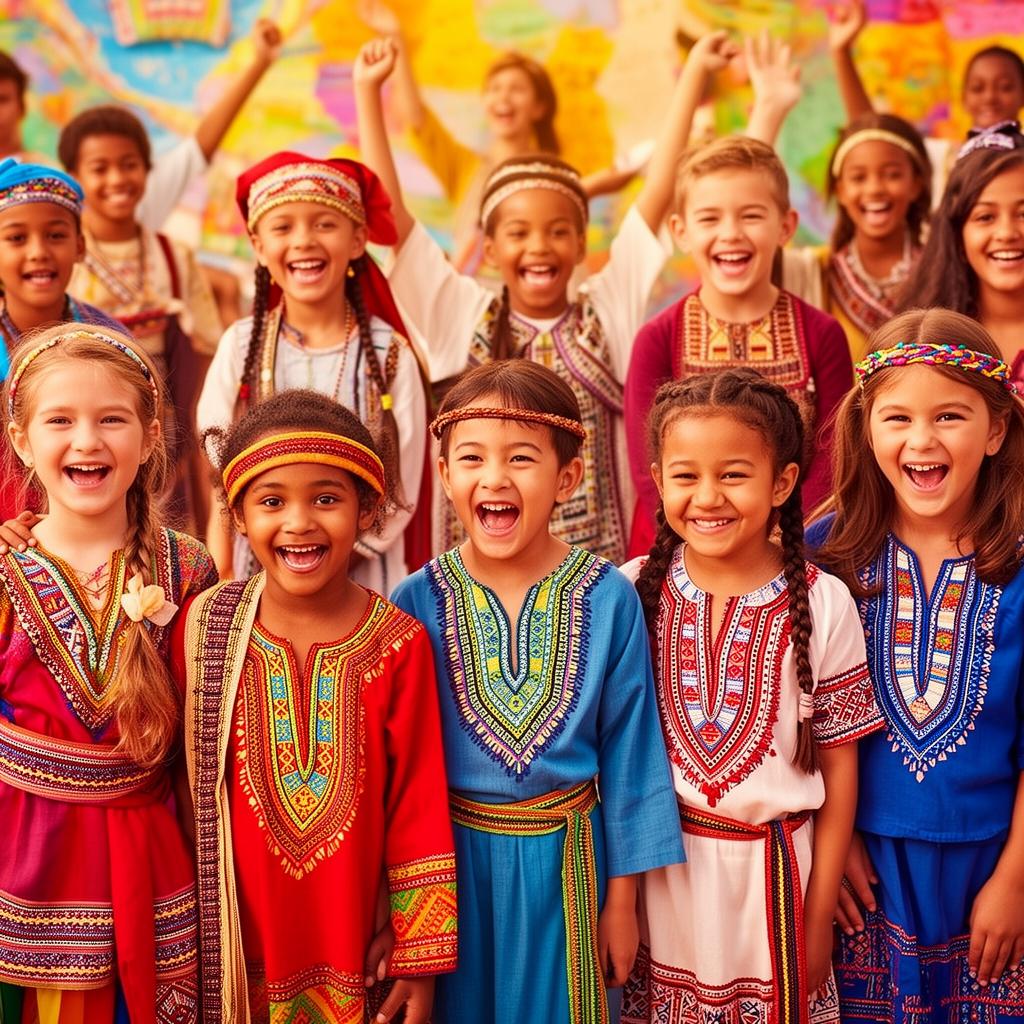
A Journey Around the World: Discovering Traditional Children's Clothing
Fashion is much more than just a matter of fabrics and trends. It is a reflection of our history, our cultures, and the values we cherish. This is especially true when it comes to children's clothing, where every woven thread tells a story, and every color carries a heritage. Across the globe, traditional children's clothing reveals ancestral customs, vibrant celebrations, and unique artistic practices. In this article, we invite you on a fascinating journey, a colorful and diverse exploration of traditional outfits for children across different cultures. From the radiant warmth of Africa to the subtle elegance of Asia, from the rich histories of Europe to the vibrant patterns of the Americas, each tradition offers a unique glimpse into cultural identity. Join us on this textile adventure, where every garment tells a story, celebrating the richness and diversity of our world.
Section 1: Africa - The Textile Treasures of Children
Africa, with its mosaic of cultures and histories, offers an extraordinary panorama of traditional children's clothing, each telling its own story. Take Madagascar, for example, an island where colors and textures blend into a cultural kaleidoscope.
Madagascar: The Richness of Lambas
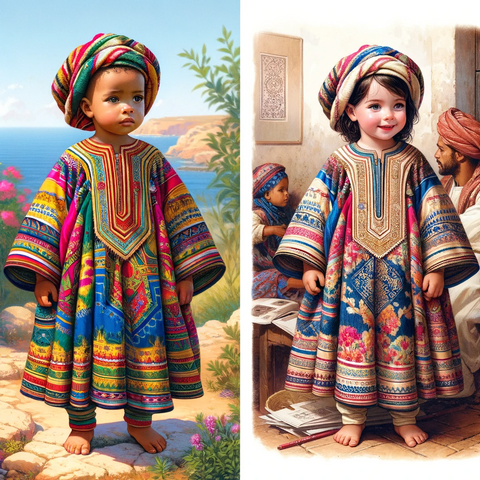
- Lambas for the Little Ones: In Madagascar, lambas, traditional pieces of fabric, are worn by children from a very young age. These fabrics, often made of cotton or wild silk, are adorned with various patterns and bright colors.
- Meaning and Occasions: Lambas are not just clothing; they are markers of celebrations and rites of passage. They are often worn during important ceremonies such as the Fandroana (royal bath) or independence festivities.
- Transmission of an Art: The making of these fabrics is an art passed down from generation to generation, representing a living, breathing cultural heritage.
Tunisia: The Elegance of Jebbas
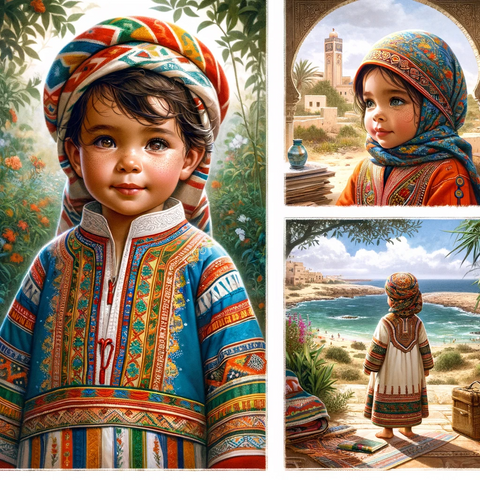
- Jebbas for the Young: In Tunisia, the jebba, a loose and comfortable garment, is often worn by children on special occasions. This garment, although borrowed from the adult wardrobe, is adapted for children with lighter fabrics and cheerful colors.
- A Touch of Modernity: Although traditional, the jebba has evolved to suit modern tastes, with delicate embroidery and fabrics like linen or cotton.
- Celebrations and Identity: Worn during religious festivals or weddings, the jebba on children is a symbol of pride and cultural belonging.
Section 2: Asia - Weaving Traditions and Histories
Asia, with its cultural and historical richness, offers a fascinating range of traditional outfits for children, each with its own story and meaning.
Japan: The Kimono, a Heritage for Children
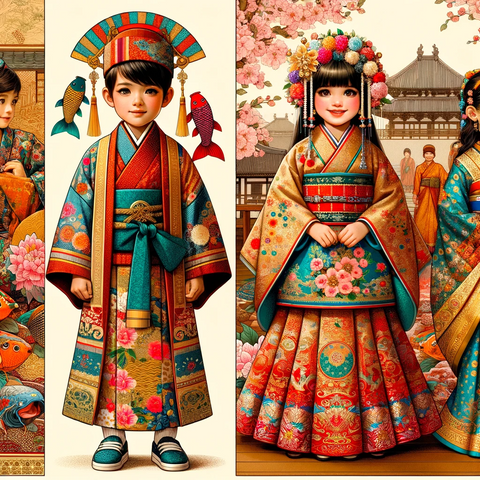
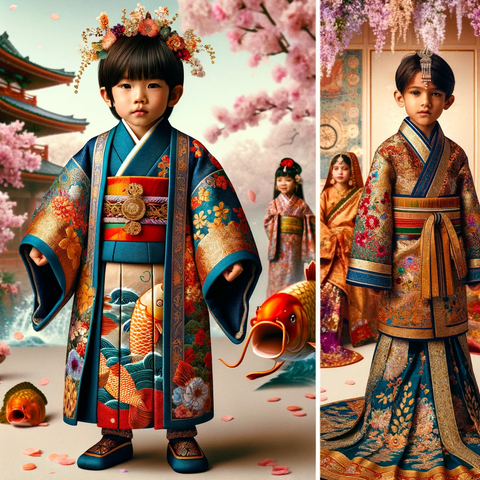
- Miniature Kimonos: In Japan, the children's kimono is a true work of art. Smaller in size but not in importance, it is often adorned with symbolic motifs like cherry blossoms or carp, representing health and longevity.
- Ceremonies and Festivals: Kimonos are especially worn during important ceremonies like Shichi-Go-San, a festival celebrating the growth and well-being of children.
- Craftsmanship and Modernity: The making of a kimono is an art in itself, blending traditional know-how and modern design to create unique and meaningful pieces for children.
India: The Splendor of the Sherwani and Lehenga for the Little Ones
- Sherwani and Lehenga: In India, sherwanis for boys and lehengas for girls are traditional outfits worn on grand occasions. These garments are often richly embroidered and made from luxurious fabrics.
- Festivals and Weddings: These outfits are essential for festivals like Diwali or weddings, reflecting the joy and splendor of these celebrations.
- Diversity of Styles: The sherwani and lehenga come in a multitude of styles and colors, reflecting the cultural and regional diversity of India.
Section 3: Europe - A Heritage of Fabrics and Traditions
Europe, with its cultural diversity and rich history, presents children's clothing traditions that are as varied as its countries. Each outfit tells a story, reflecting the history and customs of a region.
Germany: The Charm of the Dirndl and Lederhosen for Children
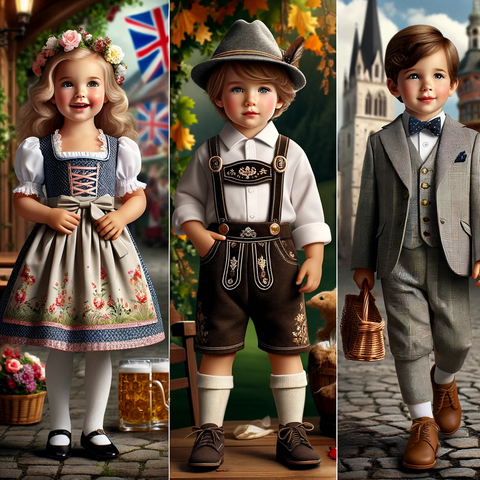
- Miniature Dirndl and Lederhosen: In Germany, dirndls for girls and lederhosen for boys are traditional Bavarian outfits that have stood the test of time. Adapted for children, these clothes retain traditional details while being practical and comfortable for young wearers.
- Oktoberfest and Beyond: Although closely associated with Oktoberfest, these garments are also worn at village festivals, weddings, and other traditional celebrations, reflecting a strong sense of regional identity.
- Preservation of Tradition: The wearing of these outfits by children is a way to preserve and transmit cultural traditions, teaching the younger generations the importance of their heritage.
France: The Elegance of Traditional Children's Clothing
- French Elegance: France is known for its elegant fashion, and this is also reflected in its traditional children's clothing. From delicately embroidered dresses to small suits, each piece demonstrates an attention to detail and timeless elegance.
- Celebrations and Fashion: These clothes are often worn on special occasions such as baptisms, first communions, or weddings, symbolizing French sophistication and charm.
- Influence on Contemporary Fashion: Traditional French children's clothing has influenced many fashion designers, who draw from this heritage to create modern and chic collections for the youngest.
Section 4: The Americas - A Patchwork of Colors and Cultures
The Americas, with their dynamic mix of indigenous, European, African, and Asian cultures, offer a fascinating array of traditional children's outfits, each telling a unique story of fusion and identity.
Mexico: The Vibrancy of Traditional Children's Outfits
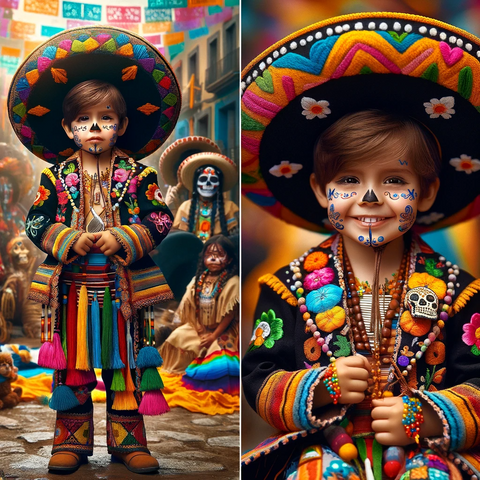
- Colors and Joy: In Mexico, traditional children's clothing is often bright, colorful, and adorned with detailed embroidery. These outfits reflect the joy and vibrancy of Mexican culture.
- Festivals and Celebrations: These outfits are a central element in celebrations such as Dia de los Muertos (Day of the Dead) or local festivals, where children dress up to participate in the festivities.
- Heritage and Modernity: The tradition of these outfits is carefully preserved while adapting to modern tastes, creating a tangible link between the past and the present.
United States: The Attire of Indigenous Peoples for Children
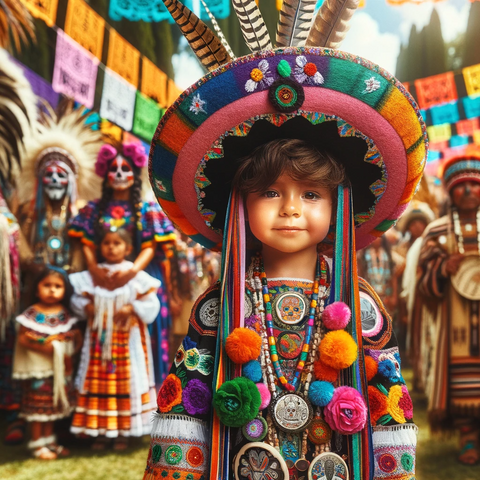
- Indigenous Traditions: In the United States, the traditional attire of indigenous peoples for children is deeply rooted in the history and beliefs of each tribe. These garments are often made of natural materials and adorned with beads and symbolic patterns.
- Ceremonies and Teachings: Worn during ceremonies or cultural gatherings, these outfits are a way for children to learn about and celebrate their cultural heritage.
- Preservation of Culture: In an ever-changing world, these garments play a crucial role in preserving the traditions and languages of indigenous peoples, passing on the richness of their culture to new generations.
Traveling across continents, from vibrant Africa to mystical Asia, from elegant Europe to the colorful Americas, we have discovered the richness and diversity of traditional children's outfits. Each garment, beyond its aesthetic beauty, is a silent narrator of stories, traditions, and cultures. These outfits are not mere clothes; they are emblems of identity, witnesses to history, and carriers of values.
In a world where modernity is rapidly advancing, these clothing traditions play a crucial role. They remind us of the importance of preserving our cultural heritage while embracing change. By passing these outfits down from generation to generation, we provide children with a tangible link to their past, while equipping them for a globalized and interconnected future.
At Azala, we understand the value of this heritage. By incorporating elements of these traditions into our creations, we aspire to celebrate not only the aesthetics but also the spirit of these diverse cultures. Ultimately, these traditional children's clothes are more than fashion; they are a bridge between generations, cultures, and peoples, unifying the world in its splendid diversity.
We hope this journey through traditional children's clothing has inspired and enlightened you. In every woven thread, in every pattern, there is a story to tell, a culture to celebrate, and a future to build together.