
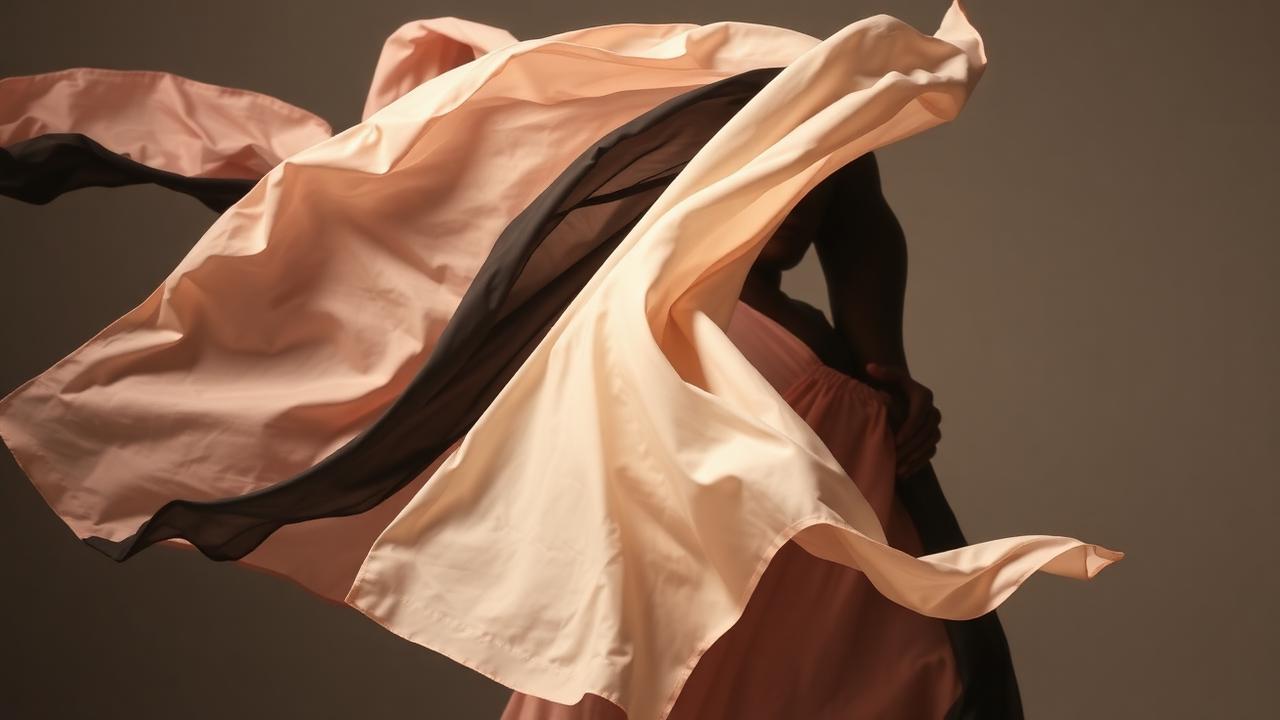
What is Fashion?
In short:
- Fashion = the ways of dressing collectively adopted at a given time and place.
- Three dimensions: social language, creative practice, textile industry.
- Landmarks: from the court of Versailles to fast fashion, then slow fashion.
- 2026 stakes: carbon impact, regulation (AGEC, CSRD) and upcycling.
What Is Fashion? A Definition
Fashion is the set of ways of dressing collectively adopted at a given time and place. It covers three overlapping realities: a social language (what clothing says about us), a creative practice (design, material, cut) and an industry (the textile chain, from fibre to end of life). We speak of "fashion" rather than simply clothing as soon as a style spreads, renews itself and eventually goes out of date.
Fashion, style, trend: not the same thing
- Fashion: the collective, dated movement shared by a group or society.
- Style: the individual signature, stable over time, that outlives fashions.
- Trend: the short, seasonal signal that announces or accelerates change.
- The garment: the concrete object, with its material, making and lifespan.
Fashion is a complex expression, at once an art form, a global industry, and a vehicle for social change. This article will analyze its multiple dimensions, from its historical origins to its contemporary embodiment in the world of children's wear, and finally address the imperative of responsible fashion—a central concern for our studio.
A Historical and Cultural Heritage
The history of clothing is inseparable from that of humanity. Since prehistoric times, beyond the simple need for protection, clothing has served as a social marker. From the luxurious adornments of Egyptian pharaohs to the symbolic togas of Roman citizens, every civilization has used clothing to structure its society and express its values.
Some accessories have had surprising trajectories. High heels, for example, were initially designed for Persian horsemen to improve their stability in the saddle before becoming an emblem of status and then femininity in Europe. These evolutions demonstrate fashion's ability to reinterpret objects and symbols.
Above all, clothing is a faithful mirror of its time. It accompanies and sometimes even anticipates cultural, technological, and social changes. The miniskirt of the 1960s symbolized a new stage in women's emancipation, while the grunge style of the 1990s reflected the desire of a segment of youth to break away. Each garment is thus an extension of a historical legacy.
Children's Fashion: Between Style and Education
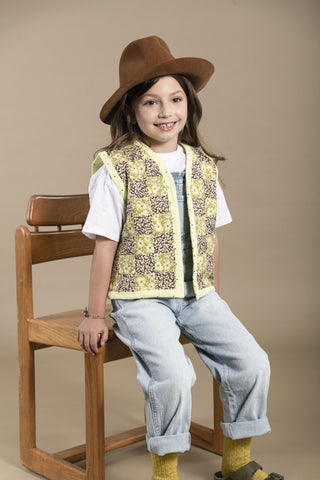
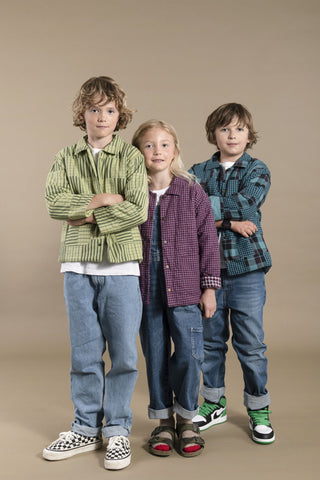
The children's fashion segment has undergone a profound transformation. Long dominated by purely practical considerations—comfort, durability, and ease of care—it has opened up to a creativity and stylistic diversity comparable to that of adult fashion. Today's children's collections offer a vast range of expressions, from formal wear to casual outfits.
This growing sophistication reflects a new perception of the child, now seen as an individual with their own tastes. Beyond aesthetics, clothing becomes an educational tool. Choosing a wardrobe for a child is also an opportunity to pass on fundamental values.
Opting for clothes from responsible production, for example, allows the youngest to be introduced to the concepts of sustainability and conscious consumption. It is a concrete way of showing them that elegance and respect for the environment can be closely linked. At Azala, every creation for children is designed at the intersection of these stylistic and ethical requirements.
The Imperative of Responsible Fashion
The universal appeal of fashion should not overshadow its environmental and social impact. The "fast fashion" model, characterized by the accelerated renewal of collections and an incentive for overconsumption, has led to production and distribution practices with heavy consequences. In response, the concept of responsible fashion is gaining ground.
Responsible, or sustainable, fashion encompasses a set of practices aimed at reducing the ecological footprint and improving social conditions in the textile sector. It favors the use of sustainable, recycled, or organic materials, as well as less polluting manufacturing processes. Upcycling, which consists of giving new value to existing textile materials to create higher quality pieces, is an essential component.
This approach is not a fleeting trend but a fundamental movement that is redefining industry standards. For Azala, these principles are at the core of our identity. They guide every one of our decisions, from model design to production, with the ambition of offering fashion that combines aesthetics, quality, and conscience.
Azala's Synthesis: Style, History, and Sustainability
In summary, fashion is a language that tells our story, reflects social dynamics, and, today, embodies our ability to innovate for a more sustainable future. From a haute couture piece to an everyday garment, every creation carries a heritage and a responsibility.
At Azala, our approach is part of this vision. We design children's collections that combine contemporary aesthetics, comfort, and environmental responsibility. We are convinced that the future of fashion lies in informed and conscious choices, which allow a valuable heritage to be passed on to future generations.
Every garment has a story and every production choice has an impact. It is by integrating this reality that we contribute, at our own level, to the advent of a fairer and more respectful fashion for the world around us.
Fashion as an Industry: Key Landmarks
Understanding fashion means looking at the supply chain behind it. Textiles are among the most globalised sectors: a single garment may have its fibre grown on one continent, spun on another and assembled in a third country before being sold thousands of kilometres away. This dispersion explains both the historical fall in prices and the difficulty of tracing a garment's real impacts.
ADEME and the Ellen MacArthur Foundation publish reference analyses on these impacts and on the circular models designed to reduce them. In France, the sector also falls under extended producer responsibility for textiles, managed by Refashion.
The Life Stages of a Garment
- Material: fibre growing or synthesis, spinning, weaving or knitting.
- Finishing: dyeing, printing, treatments — the most water- and chemical-intensive stage.
- Making: cutting and assembly, where much of the perceived quality and the social conditions of production are decided.
- Distribution: logistics, retail, e-commerce, returns.
- Use: care, repair, resale.
- End of life: reuse, recycling, upcycling or disposal.
Upcycling: Azala's Answer
At Azala we work from fabric offcuts left over from existing production: materials already made, already shipped, that would otherwise be lost. Upcycling does not merely recycle; it gives a material a more valuable destination than the one it was headed for.
In practice this reverses the design method: instead of drawing a collection and then sourcing fabric, we start from the available stock and design within its constraints — fabric width, limited quantity, fixed colours. It is more demanding, and it is what gives the pieces their character, often in short runs or one-off items.
Frequently Asked Questions
What is the difference between fashion and haute couture?
Haute couture is a legally protected designation in France, reserved for houses meeting criteria set by the Fédération de la Haute Couture et de la Mode. Fashion is a far broader cultural phenomenon covering ready-to-wear, second-hand and everyday clothing.
Why does fashion keep changing?
Because it serves two social functions at once: standing out and belonging. As soon as a style becomes widespread it loses its distinguishing power, which drives renewal. Industry then accelerated that natural cycle by multiplying collections each year.
Can fashion really be sustainable?
Yes, provided it is measured rather than declared: material, lifespan, repairability and traceability. That is the difference between a documented approach and greenwashing.