
Supply Chain Impact Analyst or Traceability Project Manager: Training Students for Jobs That Don't Exist Yet
Summary:
- Ecological context and European sovereignty: a shared understanding of supply chain challenges
- Greater supply chain transparency means a rise in new skills
- Traceability and the new economy: the textile industry example
- LCA and European regulations in the transformation of supply chains
- The new jobs of the transition: a focus on supply chain and sustainable procurement roles
- Educating students: a societal challenge
As the imperative for greater sustainability and good environmental practices grows, the need to transform corporate supply chains is becoming increasingly urgent. This necessary paradigm shift involves developing new professions and new skills focused on sustainability. In the coming years, new divisions are expected to emerge within companies, focusing on sustainability strategy, eco-design, green logistics, and impact-driven procurement. A host of new jobs that do not yet exist will soon be essential for businesses! The challenge is clear: to anticipate the world of tomorrow, we must urgently analyze these new needs to prepare the future players of the economy to thrive in this new world!
Ecological context and European sovereignty: a shared understanding of supply chain challenges
While the Covid-19 crisis highlighted the problems tied to just-in-time supply chains, it is the global ecological context that is set to impose a profound transformation on our economic cycles. The issue of economic sovereignty and ecological risk align on a common observation. Decisions made overseas (e.g., " Build America, Buy America ") are forcing us to think of new ways to ensure our ability to preserve our European economies, while promoting their transition to a sustainable model. Whether it’s rare metals or organic or fair-trade sourcing, procurement methods will undergo lasting evolution and become more complex. While the price signal has been all-powerful until now, companies will have to consider a multitude of new criteria to face future challenges: guaranteed traceability, assured availability, carbon footprint, etc. Beyond these new "boxes to check," it seems clear that the human, technical, and technological constraints will be significant. "True" traceability of our supply chains means knowing the entire value chain, from the tier-5 supplier to the final customer, in a world where it will undoubtedly be less easy to travel to the four corners of the globe.
Greater supply chain transparency means a rise in new skills
This need for transparency, also demanded by European consumers , is creating a new sector of the economy. We often talk about CSR (Corporate Social Responsibility), and although this is a relatively recent trend, the entire economy is adapting to this new requirement. Whether through in-house employees or specialized consultants, the number of people working directly on CSR subjects is constantly increasing . In industry, the entire subject of procurement could be integrated into a broader CSR division, given its importance in companies' overall environmental footprint. Almost all procurement or import-related topics involve criteria directly applicable within a CSR strategy: employee well-being (suppliers), eco-design, traceability, etc. Furthermore, for CSR objectives to be met, the need for training will be immense. If we aim to move as far away as possible from greenwashing by building a more rational and responsible economy, every employee must be able to assess and understand the various environmental impacts related to their industry. Although it seems obvious to all of us, like learning a foreign language, ecology has many false friends. It is sometimes less ecological to drive an electric car or buy "Made in Europe," because a whole set of vast criteria and sub-criteria must be analyzed to grasp the overall impact of a manufactured product. And this great complexity will have to be learned and understood by the decision-makers and actors of the new economy.
Traceability and the new economy: the textile industry example
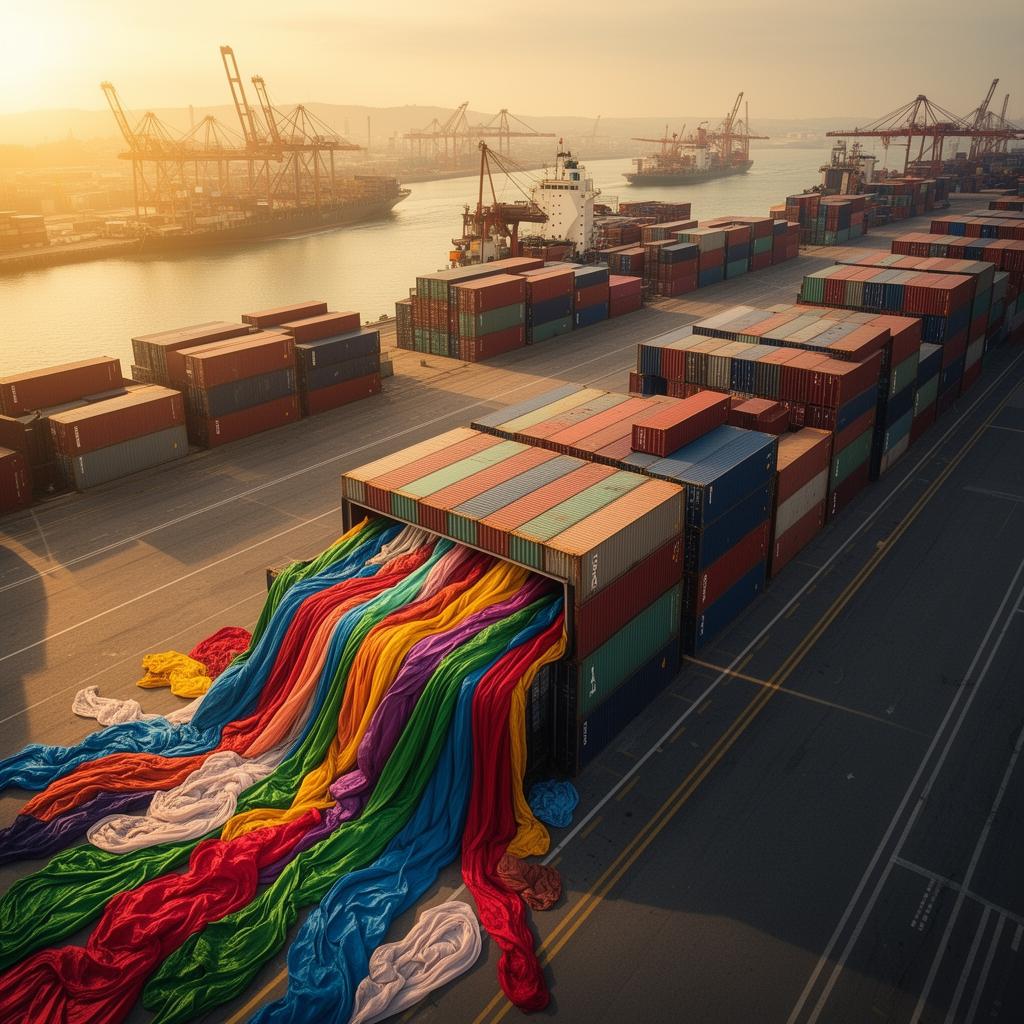
The textile industry is a good indicator of the difficulty in transforming our industries. Changing the paradigm is what new fashion brands specializing in upcycling (making clothes from existing materials) are trying to do, for example. Upcycling has the immense advantage of recreating a manufacturing cycle without producing raw materials, which are by far the largest item in the industry's carbon footprint (if we consider the raw material from cultivation to processing and transport). Nevertheless, from a transformation perspective, whether for sovereignty or CSR purposes, using existing material implies even more difficult traceability. Yet, this traceability remains necessary in order to properly optimize the reuse of material, or to be able to ensure its origin and composition.
Azala: A concrete example

Let's take the example of Azala, an upcycling brand that makes quilted clothing. Each garment made requires a quantity of small textile scraps (which will be shredded) to make the padding and others that will be reconstituted into a fabric. The primary constraint is to know the precise composition of the materials used, in order to display it on the product's nomenclature. The broader constraint is to know all the original suppliers (manufacturers) of the textile waste used, for safety, quality, and ethical reasons: even though they are unused scraps, it is essential to know that the original fabric was not used to finance a slavery network.
All this complex data requires significant documentation (and sometimes investigation) work. These are additional human and intellectual resources compared to a conventional industry.
LCA and European regulations in the transformation of supply chains
The European Union (EU) has implemented several measures to promote the transformation of supply chains, and an essential aspect of this legislation is the use of Life Cycle Assessment (LCA), which is a method for assessing the environmental impacts of a product, process, or service throughout its entire life cycle, from raw material extraction to disposal.
LCA is used in several European directives, such as the Ecodesign Directive , which sets minimum environmental performance requirements for energy-related products. The directive requires manufacturers to consider the environmental impacts of their products throughout their life cycle, including raw material use, energy consumption, and disposal. Companies are thus required to conduct an LCA to identify and assess the environmental impacts of their products and to design them to minimize these impacts. Many other directives, like the Circular Economy Directive , integrate progressive constraints aimed at making economic models more in line with the challenges of the ecological transition.
All these different European directives incorporating LCA or other related regulations will compel companies to transform their procurement methods from within. Logically, this transformation will have to rely on new skills, some of which are still in their infancy...
The new jobs of the transition: a focus on supply chain and sustainable procurement roles
The new positive constraint of LCA is directly correlated with the need to train "Sustainable Buyers" (sustainable procurement) specialized in implementing new sourcing methods with suppliers. Beyond the traditional purchasing criteria (price, quality, availability, etc.), new environmental notions are thus introduced. To minimize the risk of green-washing, common environmental criteria must be defined. These include, for example, criteria ranging from the ecological footprint related to the raw material to the energy used in production. Logically, all criteria that help reduce the final ecological footprint of a manufactured product must be explained and considered (cf. Lucie label).
The element that draws the most attention is the energy footprint, since a majority of non-European supplies still rely on production based on fossil fuels.
The role of the sustainable buyer thus takes on its full importance, and profiles capable of meeting these challenges are increasingly sought after. We are seeing more and more large groups indexing the payment of bonuses or stock options on their carbon trajectory. As a result, the demand from companies for these rare profiles is constantly growing, as evidenced by the creation of higher education institutions specializing in the new professions of the ecological transition.
Other professions complement that of the sustainable buyer, such as supply chain consultants specializing in sustainable supply chains. This new specialist helps companies transform their supply chain by promoting sustainability and finding methods to reduce the companies' ecological and social footprint. The means of action are broad: sustainability audits, waste reduction, energy mix analysis, recycling, or even the implementation of "sustainable marketing" by encouraging consumers to favor products from "clean" supply chains.
The example of Ecoalf, a Spanish clothing company, perfectly illustrates the importance of these new professions. By optimizing and shortening its supply chain, Ecoalf has built an economic cycle based on recycling and the use of green energy. The company has also implemented sustainability management methods to monitor its environmental footprint at every stage of its value chain.
Educating students: a societal challenge

Training students in ecological issues is essential for transforming corporate business models. By providing future leaders with the necessary tools and methods to understand the environmental impact of their activities, we help them create more durable and less obsolete products, make business operations less energy-intensive, decarbonize supply, production, and distribution systems, as well as shorten value chains, and even measure the improvement of various environmental criteria.
Integrating environmental issues into economic activities is a pressing necessity, as it is crucial for ensuring a sustainable future for the coming generations. According to the "World Energy Outlook" report by the International Energy Agency, accelerating the energy transition is necessary to meet the objectives of the Paris Agreement on climate, which aims for a 55-60% reduction in global greenhouse gas emissions by 2030. To achieve these figures, the use of decarbonized energy is necessary, as are actions to reduce waste in production chains. Consequently, today's students, once trained on these issues, will be at the forefront of this energy and post-globalization challenge.
Klima School: training students for the new jobs of the transition
Klima School offers a comprehensive education on ecological issues by integrating training on responsible procurement and sustainable supply chain management into its curriculum. Through real case studies, students discover practical ways in which companies can reduce their carbon footprint and energy consumption.
Examples of case studies include examining European companies that have improved supply chain traceability through the use of software to monitor the origin and energy intensity of materials. Students can also study how companies can integrate renewable energy sources, such as solar panels or heat recovery systems, into their operations. In addition, they will explore the different strategies used to create more sustainable and low-carbon supply chains.
Graduates of KLIMA School will be equipped with a thorough understanding of sustainability regulations and initiatives, as well as best practices for implementing sustainable business strategies.
In summary, the transformation of supply chains has become a critical issue for the environment and for European sovereignty. Current trends show that transparency and traceability in supply chains are becoming increasingly important for consumers, businesses, and regulators. The textile industry is a concrete example, with the rise of new careers linked to product transparency and traceability.
Similarly, European regulations on product life cycles and cost-benefit analysis are encouraging companies to adopt more sustainable, low-carbon models. In doing so, they are paving the way for new careers related to the transition, particularly in the supply chain and procurement fields.
Finally, it is important to note that educating students on environmental issues is a crucial societal challenge. By encouraging future leaders to understand the levers of the supply chain, more sustainable purchasing, and to develop the skills needed to address these issues, we can strengthen our ability to transform business models and accelerate the transition to a more decarbonized, resource-efficient, and sustainable economy.
Sofiane Bouhali for Azala and Joseph Hermet for Klima School